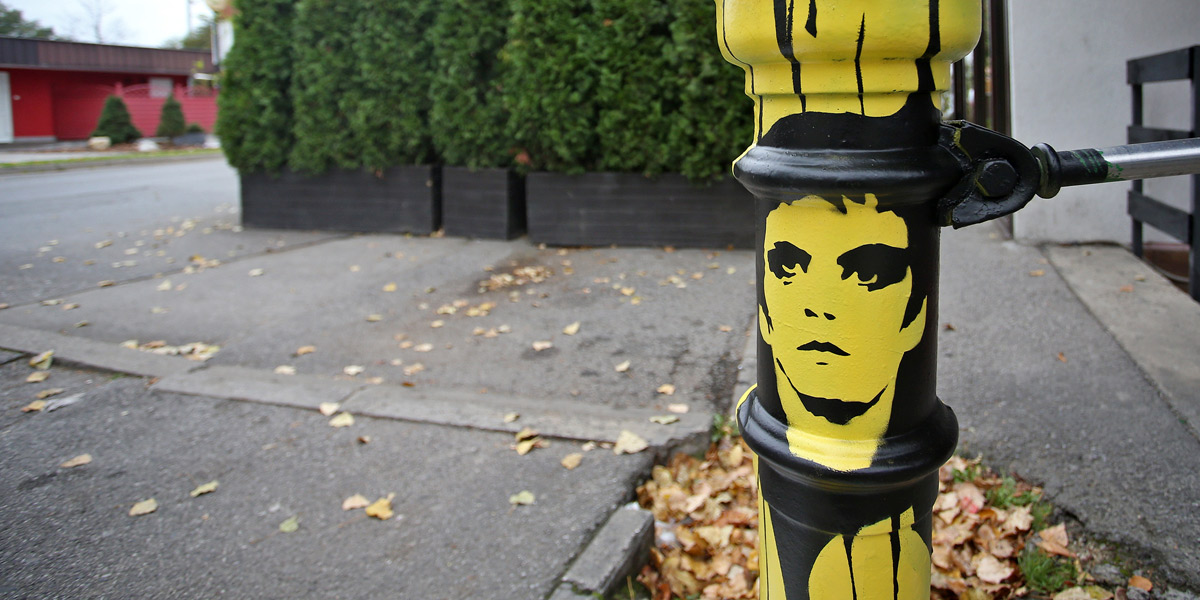
On the way in to work, I heard someone on talkback radio, sharing about Lou. He had driven Mr Reed around Brisbane when he was there in 1974. All Lou wanted to do was to go shopping. Record shopping.
What was he looking for? Linda Ronstadt’s Heart Like A Wheel, and Dobie Gray’s Drift Away. They are all now silenced. Linda by Parkinson’s and its terrible effects, Dobie in 2011, and now, finally, Lou.
Cantankerous Lou. Surly Lou.
In the early 1970s in Brisbane, young men and women dreamed away sweaty afternoons learning Status Quo songs.
“King Crimson” and “Yes” drifted from windows out into the heat haze, fighting with lawnmowers and V8s.
I was 13 in 1970, and the city’s northern suburbs were my home. These bands, and plenty more, were carefully passed down to us by older brothers and their friends: The Grateful Dead and Hendrix, Grand Funk Railroad and The MC5 – ‘60s bands with lots of guitars. And they were played through huge speakers with lots of bottom end, or radiograms with a stack of vinyl, waiting to drop one at a time onto the patient turntable. Depending on the brother, the Velvet Underground was in the stack.
You might like

The other entrance to this world was the record store, but there weren’t that many in Brisbane.
Lou discovered this in ‘74.
We were drawn to the air-conditioned cool of the city for the groovy stuff that these import shops had: Roxy Music, Eno, Bolan and Bowie. It was Bowie and Mick Ronson who gave us Transformer in 1972 and said: “Here kids, this is Lou.” And it was the record store guy who said: “If you like that, you’re gonna LOVE this!” and out came VU and Loaded and The Velvet Underground & Nico. Doors to a darker, vibrating, dense place where there seemed to be no rules.
And within a year or two, the New York bands and the London bands were showing us all.
They called it punk. We cut off our hair, unlearned those Genesis and Yes songs, and went louder and simpler. Every band I was in for the next 20 years did a Velvets song.
Jim Dickson from The Survivors (and eventually Radio Birdman) started it one blistering Brisbane day, teaching me not only how to play “Sunday Morning”, but showing me that simpler is often better. We tore a leaf, many leaves, out of the Velvet’s book: one chord will do, noise goes with anything, a pop song is still a pop song. Lou knew about pop songs. He had started out writing for Pickwick Records, which was like our K-Tel.
Subscribe for updates
But the real lesson from Lou was about darkness. There was an aching inside us, whether here in Brisbane or on the Lower East Side, that he wasn’t scared to address. He was cynical and romantic and funny, but mainly he was fearless.
And he talked about the world we all knew: junkies and drag queens and cops and endless waiting. Every town had these. Every town, everywhere. Transformer made sense to us, as The Velvets had.
And then, in 1978, came Street Hassle.
Lou Reed had always been good at stories. Plots. Characters. Tiny novels put to music. Street Hassle contained my favourite Lou story, and my favourite Lou lines:
"You know, some people got no choice and they can never find a voice to talk with that they can even call their own. So the first thing that they see that allows them the right to be, why, they follow it. You know, it’s called bad luck."
I can’t even think too long about this song, its tragedy is so visceral. But it has balance and resolution – it is love and loss and redemption in equal measure. Lou was a great writer. And that’s why we kept playing Lou songs, when we were going to play covers at all. Because they were great stories.
They called him the godfather of punk. That’s what they called Iggy Pop. And William Burroughs. So the overuse is acceptable, because the company was so damn good.
I’d be happy to have those three as my fairy godfathers.
John Willsteed has played with a number of Australian bands including The Go-Betweens and is currently a member of Brisbane band Halfway. He is also a lecturer in music and sound discipline at the Queensland University of Technology. This article was first published on The Conversation.
Want to see more stories from InDaily SA in your Google search results?
- Click here to set InDaily SA as a preferred source.
- Tick the box next to "InDaily SA". That's it.
Free to share
This article may be shared online or in print under a Creative Commons licence