The revolutionary vision of Jane Austen
This year is the bicentenary of Jane Austen’s death and her celebrity continues to grow. But relegating Austen’s work to plots about ‘whether the heroine gets her man’ belittles her achievement.
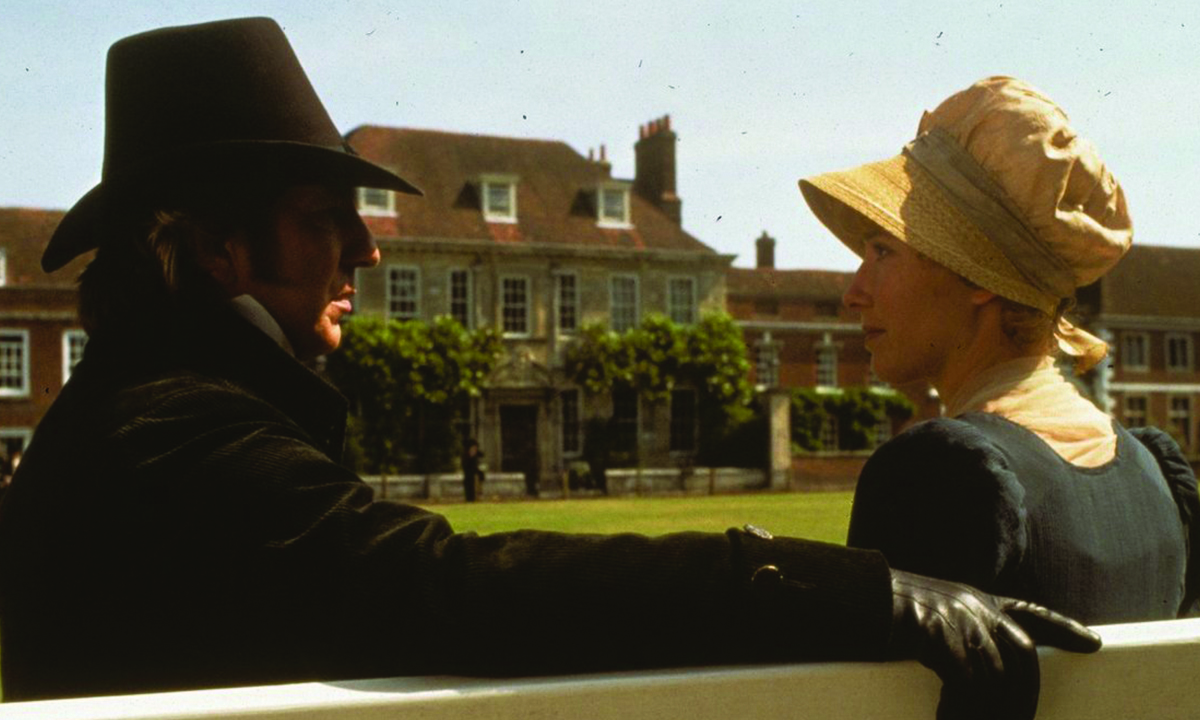
This year is the bicentenary of Jane Austen’s death and her celebrity continues to grow. But relegating Austen’s work to plots about ‘whether the heroine gets her man’ belittles her achievement.
It started with a throwaway line in a conversation with an Adelaide musical entrepreneur. We were planning a day of Jane Austen-related activities, and I suggested that we could use courtship as a theme for the music program. “After all,” I said, without really thinking, “they are courtship novels.” The contrarian imp who lives on my left shoulder immediately piped up, “Are you sure?”
I didn’t make up this idea. The literary scholar Sarah R. Morrison, for example, believes that in Austen’s novels “the narrative interest is concentrated in the central story of courtship – in whether or not the heroine gets her man – and the novel ends with a marriage”. I was unconsciously echoing the view of Morrison and others that day, but the more I thought about it – and listened to that contrary imp – the less sure I was.
So I went on to study each of Austen’s six novels with that thought in mind. I concluded that none of them have courtship – that is, the assiduous attention of the hero to gaining the heroine’s hand – as a central and animating theme.
I am not arguing that Austen’s novels are not in form all romances in the tradition of Shakespearean comedy. Austen may undercut the “happy ever after” ending but she never denies her readers the satisfaction of believing that her heroines end up in happy and companionate marriages. (I would also argue that this is not a trivial matter, given the nature of women’s lives 200 years ago.)
You might like


But relegating Austen to the limited field of plots about “whether or not the heroine gets her man” is misleading and contributes to a continuing habit of belittling her achievement, especially in the broader context of popular culture.
July 18 this year marks the bicentenary of Austen’s death and her celebrity continues to grow. Flinders University will host an international conference on the Immortal Austen in Adelaide in that month, where international scholars will get together to discuss the reasons for her continuing appeal.
Given that many readers and critics view her novels as “courtship narratives”, I believe it is worth examining the idea more closely. The scholar Katherine Sobba Green says that usually “a courtship novel began with the heroine’s coming out and ended with her wedding”. Firstly, then, let’s see how Austen deals with the initial stage.
In her first novel, Northanger Abbey, Austen explicitly satirises the courtship plot by lampooning the hackneyed plots of other novels. The narrator, tongue firmly in cheek, writes that “when a young lady is to be a heroine … something must and will happen to throw a hero in her way”. Her heroine, 17-year-old Catherine Morland, daughter of a country clergyman, is taken to the fashionable town of Bath by a family friend, and meets the sophisticated Henry Tilney at an assembly, or ball. Henry is a satirist himself, and heightens Austen’s satire by making fun of the rituals of introductions, dancing and courting in which he and Catherine are engaged.
Subscribe for updates
None of the other novels begins in this classic “courtship novel” fashion. Indeed, Austen’s fourth novel, Mansfield Park seems to confirm my unease with the label. Early in the novel, the worldly Mary Crawford asks her new neighbour Edmund Bertram whether or not his cousin Fanny Price (the book’s heroine) is “out”. Edmund says:
My cousin is grown up. She has the age and sense of a woman, but the outs and not outs are beyond me.
Nothing in the ensuing gossip between Mary and Edmund’s brother, Tom, about their fashionable world, where adulthood is merely a matter of social form, contradicts this statement. It stands like a manifesto for the novel: Fanny is not of that world. Austen keeps her apart and imbues her with a completely separate sense of values.
Still, the “coming out” does allow the heroine to encounter the hero. In Pride and Prejudice, Elizabeth Bennet meets Mr Darcy at the local assembly (or ball) where he pointedly doesn’t dance with her.
When she knows him better and thinks she doesn’t care, she teases him with that fact. He responds, stiffly, “I had not at that time the honour of knowing any lady in the assembly beyond my own party.” Elizabeth won’t let him get away with that: “True;” she says, “and nobody can ever be introduced in a ball room,” drawing attention to his failure to act the part of the courtly male.
Only one of Austen’s other heroines meets the man she falls in love with during the course of the novel, and that’s Marianne Dashwood, the “co-heroine” of Sense and Sensibility. Like everything about the brief, doomed association of Marianne and Willoughby, their meeting is terribly romantic and slightly improper. “Running with all possible speed down the steep side of the hill”, Marianne falls over and hurts her ankle.
The outrageously handsome Willoughby happens to be passing, picks her up and carries her home. But he is not the hero: she will not marry him. They fall in love, but Willoughby abandons her to marry for money.
Otherwise, the heroines have known the heroes before the action begins, usually through prosaic family connections. Sometimes they are even related, undermining further the classic contours of the courtship plot.
I increasingly believe that this, as much as the sense of romantic fulfilment they provide, is the secret of her novels’ enduring appeal, and the reason that bicentenary of her death is being celebrated worldwide with exhibitions, conferences and festivals.
Gillian Dooley is the co-convenor of Immortal Austen, an international conference to be held in Adelaide in July. Her article ‘The Bells Rang and Every body Smiled’ was published in Persuasions on Austen’s birthday last year.
Read the article in full in The Conversation.
Want to see more stories from InDaily SA in your Google search results?
- Click here to set InDaily SA as a preferred source.
- Tick the box next to "InDaily SA". That's it.
Free to share
This article may be shared online or in print under a Creative Commons licence