How Tony Abbott triggered his first No. 1 hit
The battlefield for the latest embarrassing war over same-sex marriage was declared earlier this week: American pop and rap music.
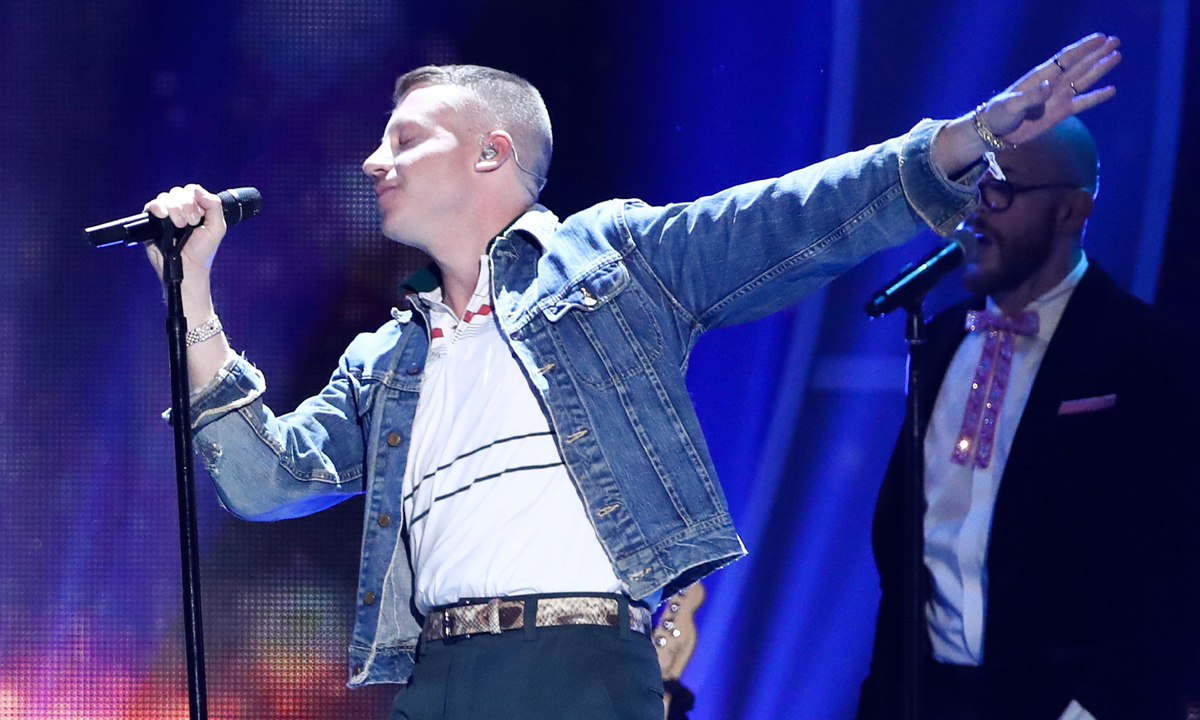
No, we didn’t decide to finally resolve the question of marriage via rap battle. (Although I’d argue that process would have about as much integrity as the one we’re currently being subjected to.)
Instead, ‘No’ supporters have sought to pressure the NRL into banning American rap artist Macklemore from performing one of his biggest hits — the pro-same sex marriage, Grammy-nominated song Same Love — at this weekend’s Grand Final.
The result? The song has received more airplay than at any point since its release five years ago, and has skyrocketed back to the Number 1 spot on the Australian iTunes singles chart.
As an arts journalist, I don’t frequently get to use sporting analogies, but I believe this is what would be referred to as an “own goal”.
When Tony Abbott threw his support behind that campaign and declared on Wednesday that “Footy fans shouldn’t be subjected to a politicised grand final. Sport is sport!” it was clear we were in for a long few days.
You might like

Of course, Abbott has a long history of being politically active at sporting events — as expertly pointed out by Buzzfeed‘s Josh Taylor — and there’s a much broader history of significant and effective political action at major sporting events. This shouldn’t come as any shock to Abbott, who travelled to South Africa on a rugby scholarship during apartheid.
And it shouldn’t come to a shock as any Australian, when the opening and closing ceremonies of the Sydney 2000 Olympic Games were packed full of political messaging: from a celebration of the country’s vibrant drag scene, to Midnight Oil’s calls for an apology to the Stolen Generation.
Immigration Minister Peter Dutton seemed to join Abbott’s calls yesterday, saying: “When I take my kids to the footy I want them to watch the footy, I don’t want some political message jammed down their throat.”
But today he’s said he believes in freedom of speech, which apparently means that “two songs should be played, one for gay marriage and one against gay marriage”.
Subscribe for updates
Leaving aside the logical fallacies and hypocrisy of many of the arguments being put forward against Macklemore’s performance, watching our politicians trying to wrap their heads around pop music to score political points has been particularly unedifying.
Politicians who support same-sex marriage, including George Brandis, have been forced to familiarise themselves and explain Macklemore’s discography and why, in a set of four songs, he would choose to include what’s his third highest-selling single in Australia. Brandis said Abbott’s support of the petition was “bizarre”, and that he thought, “Mr Abbott believed in freedom of speech”.
Then we had Pauline Hanson stating her preference for John Farnham or Daryl Braithwaite as entertainment, and Cory Bernardi declaring his love for Pink despite his objections to her political stances. He said, however, that he did not support a ban on Macklemore’s performance.
Bob Katter then colourfully and rather hysterically compared the performance to “seeping sewage into the debutante ball”. He continued: “Mate, go home, we don’t want you here.”
Who could have possibly guessed the same-sex marriage debate would take this particular turn?
One of the ironies at play here is that Macklemore’s song has actually proven to be particularly divisive among the LGBTQI communities. Although it’s a wonderfully well-intentioned song featuring choruses performed by lesbian singer Mary Lambert, many say it misses the mark in terms of its political messaging.
But the battle has largely been defined by the ‘No’ campaigners until this point, and its latest subject is this song. Only time will tell if this huge battle over a small symbolic gesture turns out to be a sensible strategy.
This article was first published on The Daily Review.
Want to see more stories from InDaily SA in your Google search results?
- Click here to set InDaily SA as a preferred source.
- Tick the box next to "InDaily SA". That's it.
Free to share
This article may be shared online or in print under a Creative Commons licence