Film review: Pet Sematary
Pet Sematary is a new cinematic take on the Stephen King thriller that even he thought went too far. So how does it compare to the original ’80s film and other back-from-the-dead horrors? Tom Richardson gives his verdict.
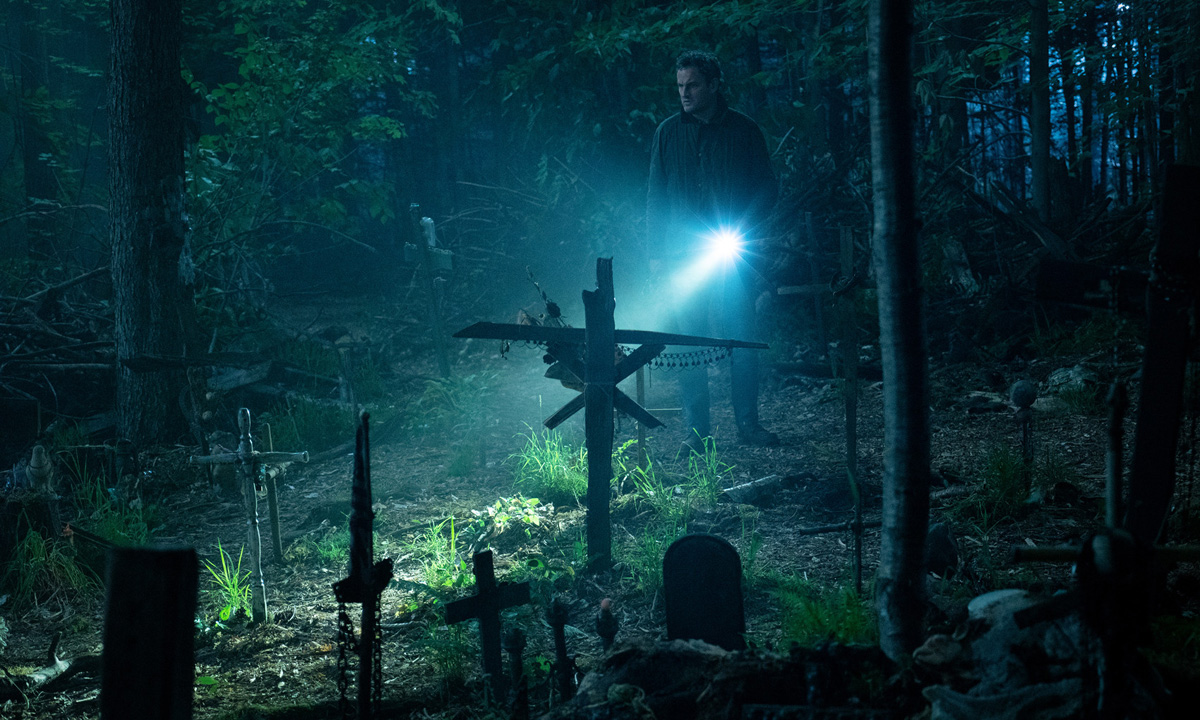
It’s tempting to expect the rebooted Pet Sematary (yes, the spelling’s deliberate), from directors Kevin Kölsch and Dennis Widmyer, to be symptomatic of the source material upon which it is based: a franchise that won’t stay dead, but when exhumed is somehow not as good as it used to be.
Thankfully, that’s not the case. A few new plot twists aside, this film treads the original Stephen King storyline as carefully as protagonist Louis Creed negotiates his way over the logpile barrier that separates the titular graveyard from the cursed Micmac burial ground behind it – and it does so deftly enough to be a worthwhile outing.
The 1983 novel was infamously regarded by its author as “the one I put away in a drawer, thinking I’d finally gone too far”.
Instead, the horror maestro went off and wrote Christine, one of his many tomes about a demon-possessed automotive, before returning to what, ironically, became one of his defining works.
“I’m proud of that because I followed it all the way through, but it was so gruesome by the end of it, and so awful,” he told The Paris Review in 2006.
“I mean, there’s no hope for anybody at the end of that book.”
You might like

Unrelentingly bleak it may be, but, unlike its fictional burial ground, this is narrative terrain that has been walked many times over, from WW Jacobs’ seminal short story The Monkey’s Paw to Bob Clark’s early zombie genre entry Dead of Night (aka Deathdream), which has inspired (and been ripped off by) generations of subsequent filmmakers, including Fred Vogel with his brutal but turgid Sella Turcica.
What separates 2019’s Pet Sematary from such fare, though, is that rare combination in modern horror: high production values and solid acting. It’s B-material done on an A-grade budget.
That includes the casting of Australian Jason Clarke (fresh off playing Ted Kennedy in Chappaquiddick), The Killing’s Amy Seimetz and veteran two-time Oscar nominee John Lithgow.
But, as with its 1989 predecessor (directed by Mary Lambert), it’s the kids who carry the day (or night, as the case may be for most of the film’s final act).
There will be inevitable comparisons to Lambert’s film – which was, let’s face it, Not Very Good. The reboot version is atmospherically darker, albeit without the gratuitous mean-spiritedness that pervades so much pop culture of the pre-PC ’80s. (Although to be fair, the entire premise of Pet Sematary is mean-spirited, so it’s only really a matter of degrees.)
There are also a few knowing nods to the 1989 version: the Ramones-penned title track again closes proceedings, while in the film’s pivotal scene, a travelling truckie is distracted by a phone-call from “Sheena” – a throwback to the punk-rock anthem that soundtracks the equivalent point in the earlier film.
Subscribe for updates
As that scene unfolds, the filmmakers introduce their first major twist on the original material.
Does it improve it? No, not really; in fact, perhaps the opposite.
But the feature of Pet Sematary and its aforementioned forebears that elevates the horror beyond standard “back from the dead” fare is the destruction of the family unit. They linger on grief, rather than on terror.
In that respect, the 2019 Pet Sematary’s denouement probably makes more narrative sense than the equally blood-soaked finale King originally envisaged.
Which is fine. After all, given the likes of Stanley Kubrick’s The Shining (which King hated) and Frank Darabont’s The Mist (which he loved), it’s fair to say that the author’s original endings are, unlike an ancient Indian burial ground, not sacrosanct.
Obviously, this one’s not for everyone – although there is clearly an audience for modern horror, judging by the prevalence of major-studio outings and the fact that in the preview I attended there wasn’t room enough to swing a dead cat (pun intended).
But if you think this is the kind of thing you’d be keen to see, you’re unlikely to be disappointed.
One final nagging thing, though, that I never quite got about Pet Sematary: if someone had the foresight to erect a woodlands barrier to keep people away from the ancient Indian burial grounds, why couldn’t the Creed family think to simply put up a fence out the front of their property?
It might have saved so much trouble.
Want to see more stories from InDaily SA in your Google search results?
- Click here to set InDaily SA as a preferred source.
- Tick the box next to "InDaily SA". That's it.
Free to share
This article may be shared online or in print under a Creative Commons licence