Film review: The Quiet Girl
A withdrawn nine-year-old girl discovers a secret in a house that supposedly has no secrets in this moving and beautifully cast Irish film.
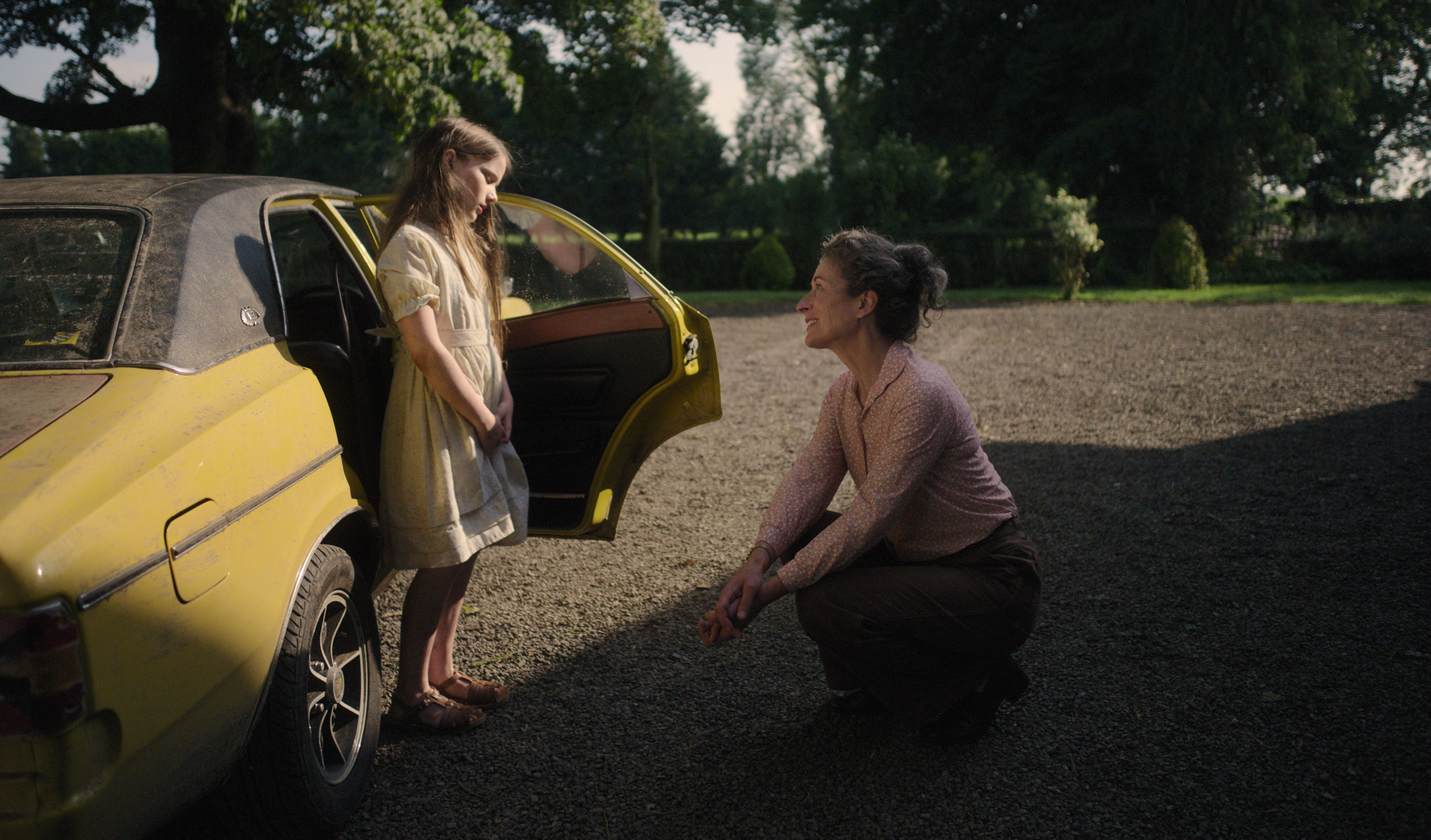
Imagine the Hollywood pitch: A young Irish girl who doesn’t say much is sent by her struggling family to stay with distant relatives for the summer. She has no idea why she is there but she helps around their dairy farm and then she comes home.
From that very simple premise, first-time director Colm Bairéad has created an exquisite, restrained story about how people – children and adults – die a little inside when starved of love and warmth.
This is the early 1980s in rural Ireland and nine-year-old Cáit (Catherine Clinch) struggles with schoolwork and is an outsider among the more outgoing girls in her class. At home, her parents are barely hanging on as the daily grind of poverty strips family life of everything but the basics. There is no overt violence, just a feeling of grim withholding in a house that lacks money, laughter and joy.
After school, Cáit sits almost unseen at the pub while her father (Michael Patric) drains his glass before returning to their crowded house and a trapped mother who is pregnant again.

We see all this through Cáit’s still and non-judgmental eyes. Things happen around her, not to her, and she wants to go unnoticed and not get in the way. We follow her as she overhears snippets of conversation as arrangements are made, and then one day she is dropped off to spend the summer with relatives, a man and a woman she doesn’t know. “Are there children here?” she asks. “No, just us,” the woman Eibhlin (a magnificent Carrie Crowley) tells her.
The house is comfortable and quiet, and Cáit wants for nothing, but there is a strain in the air that she feels but doesn’t understand. There are no secrets in this house, she is told. She wears hand-me-down clothes and settles in, enjoying Eibhlin’s maternal warmth, although Seán (Andrew Bennett) is at pains to keep his distance.
But Cáit expects nothing and, over time and without fuss, her relationship with them both deepens. She starts helping Seán in the dairy and collects the post each day, and he times her runs down to the road and back.
Only there is a secret and a nosy neighbour who pumps Cáit for inside information (Butter or margarine in Eibhlin’s pastry? Where does the dog sleep?) is only too pleased to share it with the quiet girl who listens a lot but says very little. Then summer ends and Cáit, who now has a baby brother, must go home.
The Quiet Girl’s great mercy is a moment of catharsis in which everything falls into place and the tidal wave of repressed emotion is allowed to surface, if only briefly. Filmed all in Irish and beautifully cast, it is based on a short story, Foster, by Claire Keegan, and has won seven Irish film awards, while being the first Gaelic language film to compete in Berlin.
Subscribe for updates
It is a small, perfect, and very moving film told with an unerring hold on its subject, and it reminds us how much art and power there can be in simple story telling.
The Quiet Girl is in cinemas now.
Want to see more stories from InDaily SA in your Google search results?
- Click here to set InDaily SA as a preferred source.
- Tick the box next to "InDaily SA". That's it.
Free to share
This article may be shared online or in print under a Creative Commons licence