Northern lights: The best new Nordic cinema
The global boom in Nordic noir focused on Denmark and Sweden but has spread beyond to include the smaller countries of Finland, Norway and Iceland, with all five in the spotlight during this year’s Scandinavian Film Festival.
This year’s Scandinavian Film Festival features four Icelandic films including two thrillers and a love story, Touch, set mainly in a Japanese restaurant in 1960s London. It is remarkable showing from a country with a population of fewer than 400,000 people.
There is no simple explanation for the international success of Icelandic films, says Christof Wehmeier, who heads promotion at the Icelandic Film Centre and will attend special presentation screenings of the youth drama When the Light Breaks. He thinks it may be because the country’s landscape inspires storytelling, and Iceland’s filmmakers and composers have tapped into that.
“Landscape is not just there as a showcase, it is part of the story as well,” Wehmeier says from Reykjavik. “I think those images and the beautiful storytelling make it very interesting.”
In When the Light Breaks, which opened the Un Certain Regard category at this year’s Cannes Film Festival, a young, performing arts student loses her boyfriend in a disaster but has to hide her grief over the course of a long Icelandic summer day.
“What I like about this film is how young people process a loss, a death, because it’s so intangible,” Wehmeier says. “It was shot on location, in Reykjavik, and the way it’s shot, it really worms into your subconscious mind.”
In a love story across the decades, Touch follows an intense love affair between an Icelandic man studying in London, Kristofer, and a Japanese woman he meets after he takes a job washing dishes. Director Baltasar Kormákur has won awards for thrillers that include the film Everest (2015) and the Icelandic murder series Trapped (2015-2022). This is a very different kind of film.
You might like

“It was something I wanted to do at this stage of my career as a director and as a person,” says Kormákur, who has Icelandic and Spanish parentage.
“The sense of closure at the end of your life, you’re not really looking for romance as such, it’s more like understanding, and looking for peace. All these things spoke very deeply to me.”
Based on a best-selling Icelandic novel set during the COVID pandemic, Touch follows the elderly Kristofer, now a widower and diagnosed with dementia, as he returns to London in search of his Japanese lover who disappeared without explanation 50 years earlier. It is remarkable particularly for its casting. The older Kristofer is played by Egill Ólafsson, a famous Icelandic actor singer and songwriter now in his 70s and dealing with his own diagnosis of Parkinson’s disease.
Kormákur says allowing for Ólafsson’s ill health as part of the filmmaking process was a blessing that brought the actor closer to the role.
“Everything he needed to do was, in a way, painful. It’s difficult – there is nothing easy for a man in his position. Egill used to be the big sex symbol of Iceland, the singer, you know, every woman swooned over him. And now he is an old man, and he still has that grace but he is in a very different state.”
For the key role of young Kristofer, the 1960s London School of Economics student with radical politics who threw it in to wash dishes and fell in love, Kormákur was persuaded to cast his own son, Palmi, an unknown actor and student who had appeared in minor roles as a child. Palmi, who is naturally shy and is now studying fine arts in Amsterdam, brought to the character a lanky awkwardness and beauty that is integral to the film’s success.
“It was a surprise to me that they wanted to cast him and I was very hesitant, and he was hesitant about doing it, even after the audition, so I was nervous,” Kormákur says. “But when you make a deeply personal story and you know that person is an extension of yourself in a weird way, it almost makes it even more personal.”
Subscribe for updates
The festival’s opening night film, The Riot, relates a brutal piece of history about the hardship faced by Norwegian copper miners in a remote northern town at the turn of the 20th century. Conditions were freezing and dangerous, with the men herded into sheds where they slept in the bitter cold, under the northern lights. Their struggle triggered an uprising that launched a national labour movement.
“It’s kind of old-school storytelling and it’s about justice for all,” Wehmeier says. “It is mainly shot in the harsh winter so it was hard on the actors but it really respects the story about the miners fighting for their rights.”
This year sees the return of Denmark’s much-loved cold-case Department Q series in the film Boundless, with Ulrich Thomsen in the role of the angst-ridden Carl Mørck. Based on the Department Q book series, Boundless sees Mørck take on a cold case on the remote Danish island of Bornholm.
Sidse Babett Knudsen (Borgen) is also back in an unmissable thriller, Sons, playing a tormented prison guard working in a high-security block. The film is directed by Gustav Möller, whose derailing, low-budget film The Guilty sparked a Hollywood remake starring Jake Gyllenhaal.
“That’s what always happens, when you have a good Nordic film,” Wehmeier laughs. “You know you don’t have to put a lot of money into a film that when you see it, blows you away. It’s the dialogue and the acting, and you don’t need much more.”
Also from Denmark is Birthday Girl, a film starring Trine Dyrholm (Margrete: Queen of the North), about a Caribbean cruise that becomes a nightmare. From Sweden comes Kingmaker, which follows investigative journalist Ulrik Torp, and Fight for Peace, a political thriller based on the life of diplomat and economist Dag Hammarskjöld, set during the Cold War.
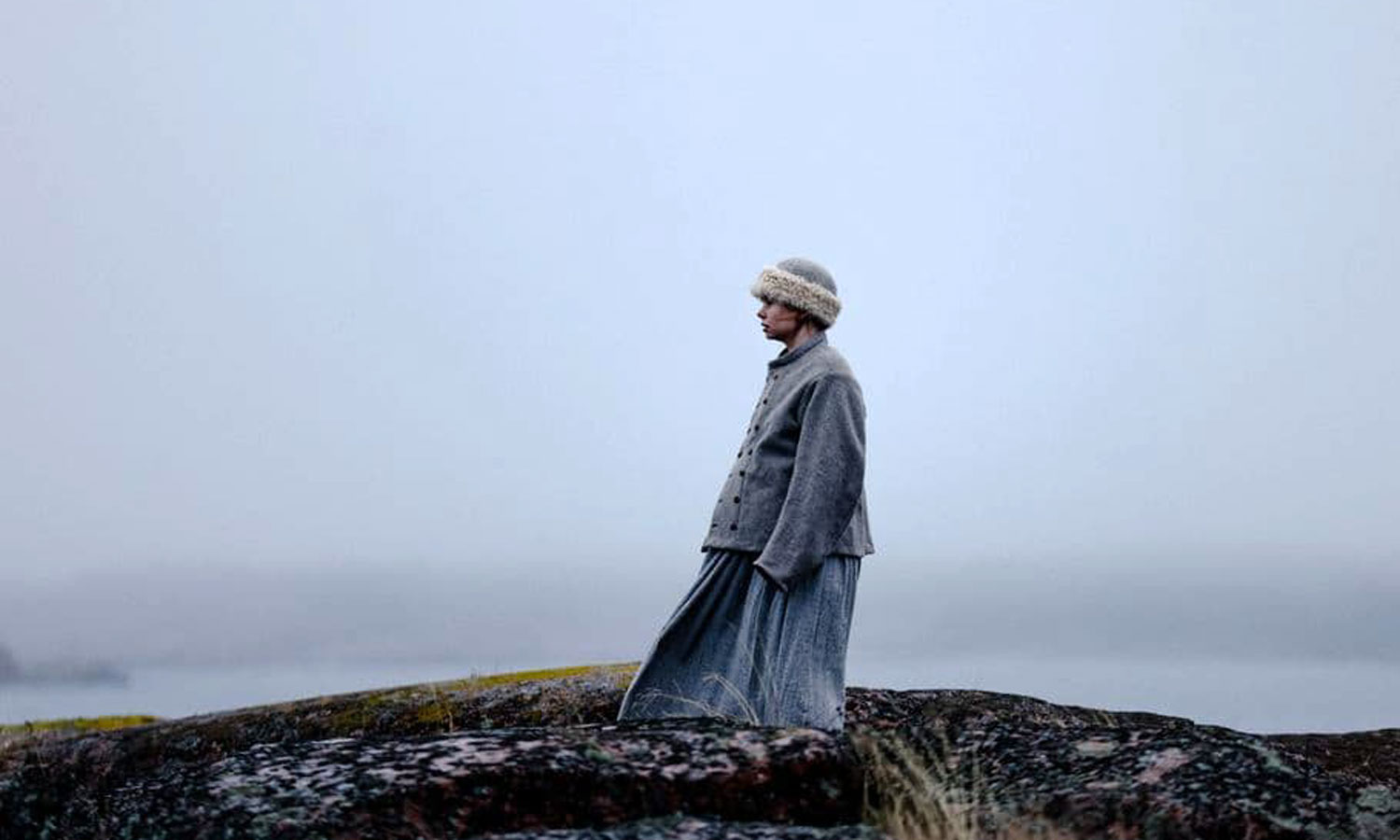
The festival’s centrepiece, the spectacular Stormskerry Maja, comes from Finland and is based on the book series by Anni Blomqvist, which follows Maja and her husband on a windswept Åland archipelago.
The strength of international interest in the cinema of Iceland, Norway and Finland led to a rebranding this year at the Cannes Film Festival as The Five Nordics, expanding the Nordic noir concept that had focused on Denmark and Sweden.
“We were part of a Scandinavian umbrella organisation but now we have the right framework,” Wehmeier says. “We are all in it together.”
The Saxo Scandinavian Film Festival runs from July 17 to August 14 at Palace Nova Eastend Cinemas.
Want to see more stories from InDaily SA in your Google search results?
- Click here to set InDaily SA as a preferred source.
- Tick the box next to "InDaily SA". That's it.
Free to share
This article may be shared online or in print under a Creative Commons licence