Way out west
“The Muslims have absolutely wrecked Auburn – it’s a toilet now,” said the burly removalist.
His buddy looked a little sheepish – and also very familiar (turns out he was a fringe television actor, appearing in shows such as The Sullivans).
The year was 2000 and we were moving into our rental in the western suburbs of Sydney on a humid summer day.
I don’t mean trendy “inner west” like Newtown or Glebe, or even “mid-west”, like Strathfield or Homebush.
I mean way out west, in Granville, an old suburb best known for the train disaster that killed 83 people in the summer of 1977.
We spent close to a year in Granville and, yes, compared to the Adelaide suburbs, it was a culture shock.
The footpaths were cracked and broken. Our street didn’t even have a proper gutter on one side – it just blended with the verge, like the shack-lined streets of Aldinga Beach when I was a kid, except this was meant to be an established suburb.
Our small street had the greatest variety of cultures I have ever experienced in one place – Indians, Greeks, south sea islanders, Lebanese, Vietnamese nuns and plenty more. The local shop, named after some long-go shopkeeper named “Cheeseman”, was run by a Lebanese family. It was totally encaged in security bars, something a well-travelled friend remarked looked very similar to the usual shop set-up in El Salvador.
The woman who lived across the road, and liked to wear giant animal-paw slippers, was Anglo-Saxon, although she insisted her husband – whom we never saw – had been a Russian spy.
You might like
Her advice to my wife one day was to “call Graeme” if she had any problems. “Graeme”, it turned out, was Graeme Richardson, the former Labor powerbroker and breakfast host at that time on 2WS, the western suburbs’ very own radio station.
We never called Graeme, but we did visit Auburn, a couple of suburbs closer to the city, despite the removalist’s opinion.
While the suburb was clearly very poor, the Auburn Botanic Gardens, we discovered, were quite beautiful.
On the weekends we would take our young children to the Japanese garden, and picnic in the open spaces where the air would be filled with fragrant smoke from countless parties of people cooking over tiny portable charcoal grills.
In the west, food always seemed to create a sense of community amidst the bleaker surrounds.
Our fondest discoveries out west, I confess, centred on food. The Saada Bakery, with just three items on the menu, all of them wonderful; Awafi Chicken, the best barbecued chicken I’ve ever tasted, served with the Lebanese garlic sauce toum; hot flat bread from the Beirut Bakery; baklava from Abla’s (“How many kilo?”, the serving assistants would ask). The fruit and veg shop always stocked sugarcane.
But there was no escaping that these were tough suburbs, with people fighting to keep up economically, or to cope with other problems. One of our neighbours was prone to fits of uncontrollable rage, sometimes screaming for hours through the night until sunrise brought some sort of mysterious calm.
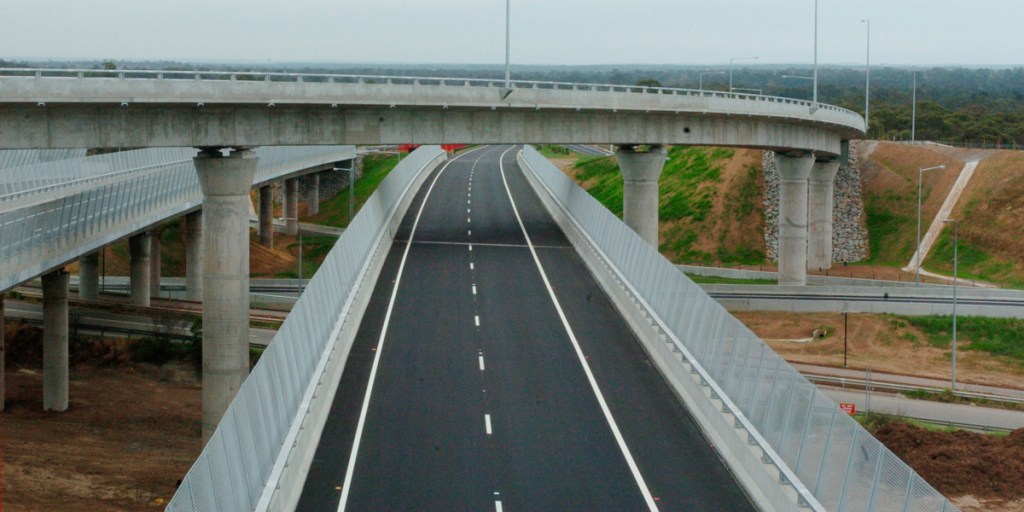
A friend who worked with the down and out and the mentally ill told us about a troubled man whose tiny flat’s bedroom window looked out on a sheer concrete sound wall – the likes of which are erected all over the place in Sydney’s vast suburbs to shield the noise from the network of high-speed freeways. Soul destroying.
There were other downsides.
The heart of the west was and is stultifying humid for us southerners, without any hint of sea or gully breeze to provide relief.
Infrastructure is stretched thin; roads frighteningly busy; trains at peak hour always jammed.
But the most striking aspect of our year in Granville – almost above all else – was the stigma.
Stay informed, daily
No-one I worked with in the city lived further west than Strathfield.
All of them were shocked – not just surprised, but stunned – when I told them I lived in Granville.
Some people were reluctant to visit us. Was it fear, or maybe, even, disgust?
Eventually, I started avoiding telling people where I lived.
Granville is almost at the dead centre of Sydney’s greater metropolitan area but not that far, really, from Sydney’s CBD – just over 20km or half an hour on the train.
But it’s a million kilometres from the Sydney you may know as a tourist or business visitor.
When people say that Sydney is one of the most beautiful cities in the world, they’re talking about a tiny proportion of the whole.
This profound sense of difference is why the western suburbs are such a unique election battlefield.
As a Prime Minister with poor polling numbers, Julia Gillard held a sleep over in the west; promising more than a billion dollars in goodies for the west; and stroking the west’s sense of pride.
This is the place where the September federal election is likely to be won or lost, and reborn PM Kevin Rudd has and will be a frequent visitor, along with Opposition Leader Tony Abbott. It’s the place the helped John Howard stay in power for so long.
It’s the place that Murdoch’s pugnacious Sydney paper, The Daily Telegraph, views as its own.
But, in contrast to the fears of many in the more leafy suburbs, I take some comfort from the fact that these vast suburbs hold the keys to our democratic future.
For it’s here that people are engaged in some of the fundamental struggles of life: many are trying to find their way in a new country under the cloak of stigma and racism; most are simply focused on trying to make ends meet, or to help their kids get a decent start in life.
As we discovered, it’s also a place where tiny acts of kindness and friendship seem to go a lot further than in the suburbs with harbour views and excellent espresso.
I can’t help imagining what might happen if our political leaders made a serious attempt to address these real concerns and dynamics, rather than using the blunt tools of fear and sloganeering.
It might just work for the rest of the country too.
David Washington is the editor of InDaily.
Want to see more stories from InDailySA in your Google search results?
- Click here to set InDailySA as a preferred source.
- Tick the box next to "InDailySA". That's it.