Budget 2014: Much more work to do
Ratings agency Moody’s has been encouraged by spending restraint in the State Government’s budget, but warns that much more work is needed to restore South Australia’s fiscal health.
It’s a message reinforced by a leading South Australian economist, who believes the time is right for the Government to conduct a biting review of the functions of the entire South Australian public sector.
Moody’s Investors Service says Treasurer Tom Koutsantonis’s first budget shows a deterioration in the state’s expected financial performance in 2014-15 and the medium term “which would be a credit negative for the state”.
However, it said that South Australia was making progress in reducing its spending rate in support of its budget targets.
“We see this development as an encouraging sign that the government is serious about budgetary redress,” it said. “Nevertheless, maintaining very low expenditure growth will require strong government resolve. Furthermore, to the extent that revenues are less robust than anticipated, the state would have to intensify expenditure savings to meet current targets.”
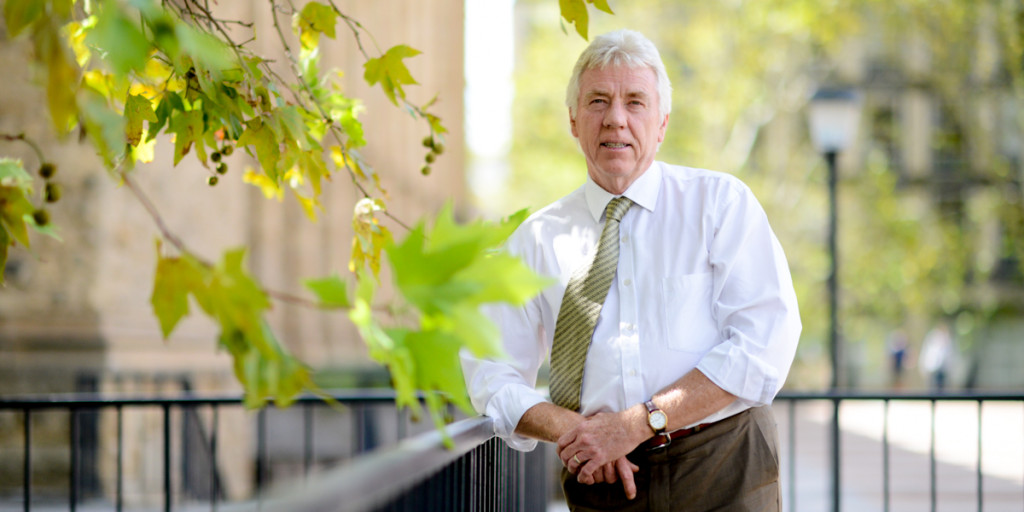
Economist Michael O’Neil, the director of the South Australian Centre for Economic Studies, said the budget showed that Koutsantonis had grasped the need for fiscal consolidation, but much more work was needed.
He said there must be some doubt over some of the “optimistic” economic assumptions, including forecasts for growth in general operating revenue, gross state product and employment.
“There doesn’t seem to be much economic stimulus there, with the hospital spending being deferred,” he told InDaily.
O’Neil also warned that one big external factor completely out of the State Government’s hands could blow the economic forecasts out of the water – the level of the Australian dollar.
You might like

He said continuing instability in the Middle East could see the Australian dollar rise, even as high as parity with the US greenback, which would dampen exports and affect manufacturing industries across the country.
However, O’Neil believed Koutsantonis’s first effort did represent a welcome attempt to address the budget’s structural problems.
“If anything has changed – leaving the politics aside, and blaming the feds – to give Koutsantonis some credit, he’s made some effort towards structural change in the budget,” he said.
“South Australia has had to make some fiscal consolidation. Queensland, New South Wales and Victoria have all done that.”
He said Koutsantonis’s next big task should be to take a serious and hard-headed look at public sector reform.
“Budgets are the time when you might signal some structural reform, but the state government needs to have a fundamental review of some of the functions of the public sector.
“There are some very serious issues with the whole calibre and competence, performance and confidence in the South Australian public sector.”
He said South Australia should take advantage of the Commonwealth’s review of federal-state relations to assess areas that it could hand over to Canberra.
He wasn’t advocating “emasculating” the public sector, but areas such as state employment programs could be usefully handed over to the Commonwealth, given it had principal responsibility for this area anyway.
Duplication in environmental regulation and reporting could also be removed so companies like BHP, for example, didn’t have to report on the same set of environmental issues to both Canberra and the State.
“We need a really biting review of the roles and functions of the State Government, and how they fulfil them,” he said.
“They need to have a fundamentally critical look at the public sector.”
Stay informed, daily
Treasurer Tom Koutsantonis, out selling his budget today, admitted Labor’s choices in power had led to a deterioration of the state’s fiscal position.
Despite his major theme of blaming the Commonwealth for state cuts, he said Labor had made a deliberate choice following the global financial crisis to keep spending on infrastructure projects “to keep South Australians working during the downturn”.
“We’ve paid a very large political price for that and we’ve paid a very large fiscal price for that, but what this budget does is bring all that under control,” he told radio station FIVEaa.
Shadow Treasurer Rob Lucas said interest payments on the budget’s record $1.2 billion deficit had removed the capacity of the State Government to build better schools, hospitals, transport services and job opportunities.
“The Weatherill Government has lost the equivalent of building almost three new Adelaide Ovals since it promised a $480 million surplus in 2010-11,” he said.
“Today’s massive deficit also casts a long shadow over the Treasurer Koutsantonis’ promise to deliver a $406 million surplus in 2015/16.
“The Weatherill Labor Governemnt has repeatedly promised a budget surplus in two years time, only to deliver a budget deficit two years later.
“The Weatherill Labor Government has delivered six budget deficits in the last seven years after initially promising that each one of those budgets would be in surplus.”
More budget coverage:
Budget 2013: Households take the pain
Budget analysis: The worst is yet to come
Want to see more stories from InDailySA in your Google search results?
- Click here to set InDailySA as a preferred source.
- Tick the box next to "InDailySA". That's it.