SA lacks will on toxic sites: former EPA chief
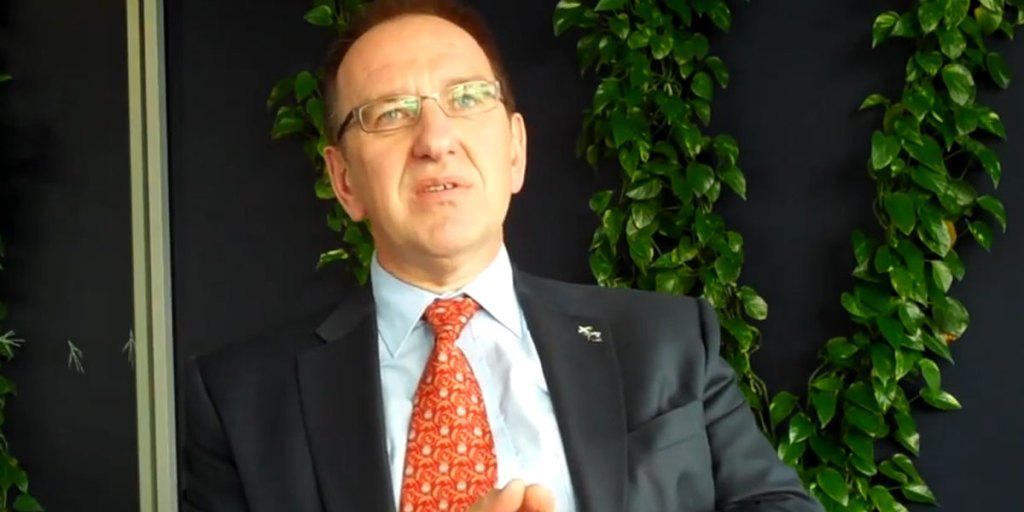
Recently departed Environment Protection Authority chief Campbell Gemmell says the task of fixing South Australia’s industrial contamination was made more difficult by “cultural” problems, including a lack of funds and political support.
Professor Gemmell, who left the EPA in May after just over two years in the job, told InDaily that South Australia did not consider the environment to be a policy or political priority, leading to an underinvestment in environmental protection.
Gemmell, who has returned to his native Scotland, also said that until relatively recently, it was common for South Australian industries to “pour waste solvents indiscriminately into the sewer or into pits on or adjacent to the site”.
His strong comments come less than a week after it was revealed that homes in Clovelly Park would need to be evacuated after a build-up of vapour from the industrial solvent trichloroethylene (TCE) was detected in homes at above the guideline level established by the World Health Organisation.
The Government has been criticised for a delay of about six weeks between receiving the report about the elevated vapour levels and informing residents about the decision to relocate them.
TCE is a carcinogen that has been linked with a host of adverse health impacts on the central nervous system, kidney, liver, immune system and male reproductive system. The Clovelly Park homes are near several industrial sites, including the former Mitsubishi factory where, in 2009, testing of bores on the perimeter found levels of TCE and other contaminants.
You might like


In an email exchange with InDaily, Gemmell said chlorinated solvents were an issue across the world, due to their widespread industrial use from the 1940s to the 1980s.
Gemmell said South Australian industries had adopted a cavalier approach to disposing of these chemicals.
“It does appear that, unlike at least some users elsewhere, it was extremely common for SA industries to pour waste solvents indiscriminately into the sewer or into pits on or adjacent to the site, store inadequately and generally take insufficient interest in proper disposal of dangerous materials, until relatively recently,” he said.
The question for regulators and Government was how to deal with this legacy.
It could be done effectively but it needed political will and money – an issue that Gemmell said he raised repeatedly with the Government during his time in charge of the EPA.
“The problem can be addressed as it has largely been in Germany, the UK, US etc but it has to be seen as a priority by governments for this to happen,” he said.
Stay informed, daily
“And where there are many (usually small) sites in the higher risk profile categories, there may not be sufficient funds or political support available to – quickly – tackle the problem. This issue was repeatedly discussed with government during my time in SA.”
Gemmell also said there were “cultural issues” in SA which worked against a coherent response to contamination problems.
“Government also needs to engage coherently across relevant departments to tackle the issue. The EPA is a process regulator and pollution advisor. Others decide on non-process intervention actions. Physical remediation is for yet others. This is often inadequately understood. Cultural issues in SA compound this.”
When asked what these cultural issues were, he said: “There are many issues but I’d lead with the observation that while SA talks up its environment as a positive underpinning asset, it is not viewed as a public policy or political priority like health, education and policing, for example, and this is underinvested in. And those highlighting the need for action are often viewed as anti-economy, while the opposite is often true.”
On the plus side, Gemmell praised the expertise of the EPA and the Adelaide-based Cooperative Research Centre for Contamination Assessment and Remediation of the Environment.
However, while owners of contaminated sites can “in theory” be made to carry the burden of fixing the problem, difficulties emerged from “orphan” or contested sites, where the goodwill of the former owner or other parties need to be relied upon.
Gemmell also questioned the simple removal of vapours from affected homes. He said this was not sensible as a real solution if the source of the contamination was poorly understood or still “open”.
Soil washing, cut and fill to waste, and biotreatment are also options.
Gemmell, a former head of the Scottish EPA, is a professor at Glasgow University and an adjunct professor at UniSA.
Environment Minister Ian Hunter declined to comment.
Want to see more stories from InDailySA in your Google search results?
- Click here to set InDailySA as a preferred source.
- Tick the box next to "InDailySA". That's it.