Homeless “need safe place” to sleep in parklands
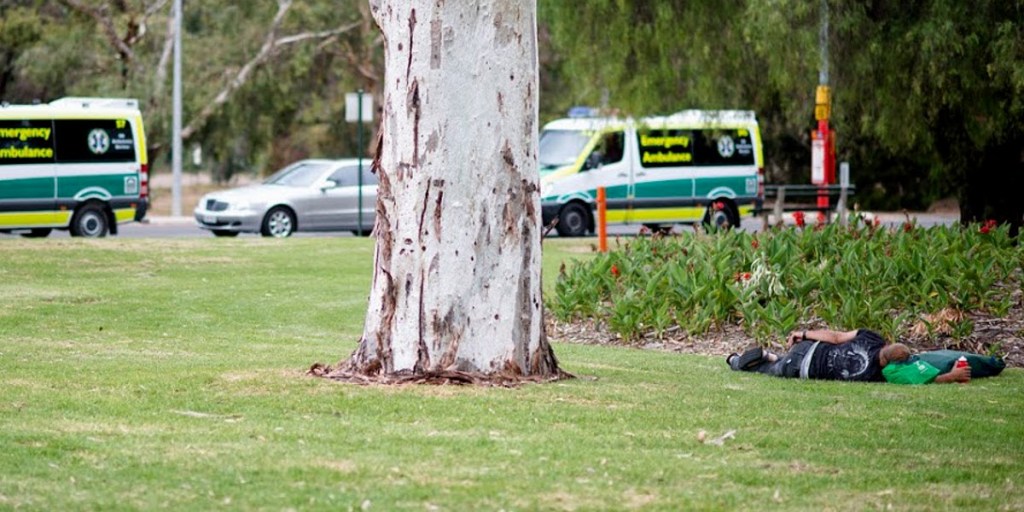
Anglicare SA has vowed to lead a collaboration of homelessness services to “step up” following the death of a reportedly homeless woman who was found in the Business SA carpark on Greenhill Road yesterday.
An autopsy will be performed on the woman whose body was discovered in the basement of the Unley carpark yesterday afternoon.
Police are treating the death as suspicious.
Anglicare SA chief executive officer Peter Sandeman told InDaily that “if this is a homeless person who has unfortunately died, it’s a further indication of the need to have a safe place”.
He said the most effective way to help rough sleepers in the CBD would be to set up a safe place to sleep inside the parklands, away from residents.
“What’s required is a place … where people can sleep rough – with minimal shelter, because we don’t want to encourage this lifestyle,” he said.
“But things like a fire pit, a toilet block and water, and a little bit of shelter from the wind are what’s required.
“(If) in the first instance they can be safe, in the second instance strong relationships can be developed with them to help them move to a more appropriate accommodation arrangement.”
You might like

A spokesperson for Adelaide City Council told InDaily in a statement: “No agency or funding body has made a submission to Council to consider in relation to such a facility”.
“Whether such a facility would compromise services’ ability to engage confidentially with vulnerable people is also a concern, as is the question of whether such a facility might increase the risk of violence between individuals.
“Any such submission would need to be clear on resourcing, monitoring and how the safety of people staying in the facility would be provided for.
“Council regularly works with agencies including Housing SA and Street to Home to support their work finding accommodation options may be available for people sleeping rough.
“Council also provides funding for agencies within the city that support vulnerable people.”
Sandeman said homelessness agencies were sometimes guilty of isolating themselves within the service system, and that a new collaboration between welfare agencies, the State Government and Adelaide City Council was needed to reduce the rate of homelessness in the CBD.
“What tends to happen, and all of us are guilty of this, we protect our own … little parts of the service system,” he told InDaily.
“There are many people sleeping in cars around Adelaide, and homeless people in the parklands, that need a much better system of support.
“What’s required is to take a step back from the immediate concern of our own agency and to forge a much more collaborative and supportive arrangement (in which) individuals can be effectively case managed … instead of having a whole lot of gatekeepers for a whole lot of agencies.
Stay informed, daily
He said agencies needed to “work collaboratively, rather than trying to move the problem on to other agencies or to blame other agencies”.
“We need to step up.”
Sandeman said Anglicare had recruited respected homelessness expert Olive Bennell from her position in the State Government to lead the collaboration.
“Olive is a very senior Aboriginal woman (who) has got the skills and experience, and authority, and respect, that’s required to bring the agencies together,” he said.
“She’s a very significant senior leader, and we’re enormously pleased that she’s decided to work with Anglicare.”
Sandeman said Bennell, who will begin work at Anglicare on Monday, would be less constrained in her ability to lead initiatives against homelessness from outside of government.
“This requires finding solutions that may be counterintuitive and won’t always be popular,” said Sandeman.
“It’s difficult sometimes to do that from within government, where … securing the approval of very many people is required.”
He said Anglicare hoped to “provide a base where Olive has less constraints on her leadership and is able to bring people around the table from a position outside of government”.
Sandeman criticised the Adelaide parklands dry zone, which was requested by Adelaide City Council and made law by the State Government in December last year.
He said the 8pm till 11am dry zone, which applies across the parklands, had destroyed the trust built up between service providers such as Anglicare with some rough sleepers, many of whom are “highly suspicious of authority”.
He said the policy tended to criminalise the homeless and drive them away from the parklands – which were not safe for them to sleep in – into equally unsafe places close to the parklands, making it impossible for services to keep contact and maintain support.
The council spokesperson said that the council “has a responsibility to ensure that city streets, squares and parklands are welcoming and safe places for all to enjoy”.
“The dry area is just one part of an overall management plan involving a number of strategies and a range of services to manage the issues and ensure we have safe and responsible use of the Park Lands. This is a whole of government approach.
“The three objectives of the dry area trial are to achieve a safer and peaceful environment for the residents of South Terrace, provide access to social services for vulnerable people, and promote safe and responsible use of the parklands for everyone.”
READ MORE:
Want to see more stories from InDailySA in your Google search results?
- Click here to set InDailySA as a preferred source.
- Tick the box next to "InDailySA". That's it.